Byzantine Coins
Results from 1 to 50 of 3012
Lot # 606
-
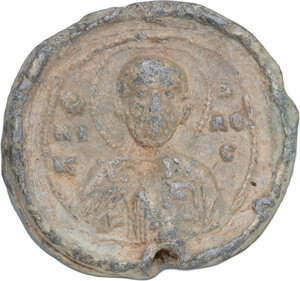
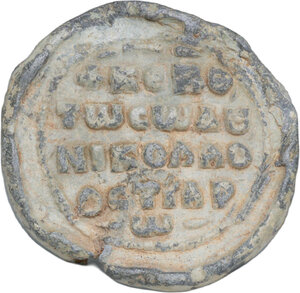
PB Seal, Byzantine, Nicholas, vestiarios, c. 11th century. D/ O A Iω O NIK[O]ΛAOC. Bust of St. Nicholas facing, holding book and blessing. R/ + KЄ BΘ Tω Cω ΔƔ NIKOΛAO OCTIAP ω. Legend in five lines. PB. 14.97 g. 28 mm. VF.
Watch:
Starting price: € 40
Number of bids: :
-
Minimum bid : €
40
B.P.: 20.00%
Closing on: 2026-09-06T14:00:00 Roma time
Lot # 605
-
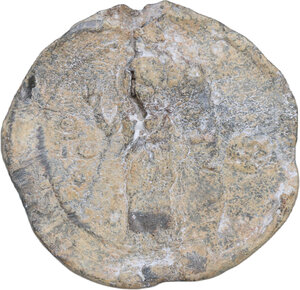
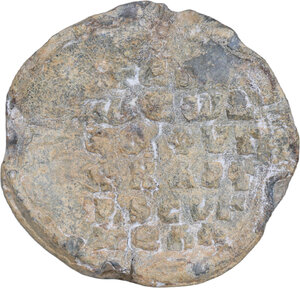
PB Seal, Byzantine, N. chartoularios and synkellos, c. 11th century. D/ O A Iω O [ΠPOΔPOMOC]. St John the Baptist standing facing, holding cross and blessing. R/ Legend in six lines. PB. 14.29 g. 33.5 mm. About VF.
Watch:
Starting price: € 50
Number of bids: :
-
Minimum bid : €
50
B.P.: 20.00%
Closing on: 2026-09-06T14:00:00 Roma time
Lot # 604
-
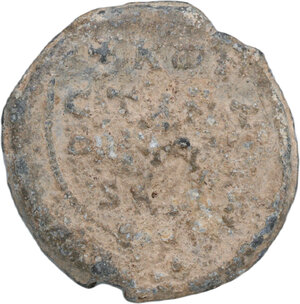
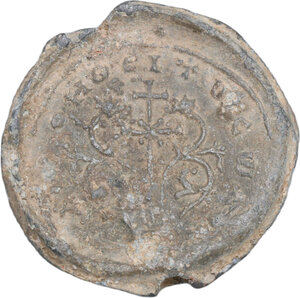
PB Seal, Byzantine, Uncertain, c. 7th-13th century. D/ + KЄ BOHΘЄI Tω Cω ΔƔ. Long cross between tendrils. R/ Legend in five lines. PB. 9.3 g. 24.5 mm. About VF.
Watch:
Starting price: € 30
Number of bids: :
-
Minimum bid : €
30
B.P.: 20.00%
Closing on: 2026-09-06T14:00:00 Roma time
Lot # 603
-
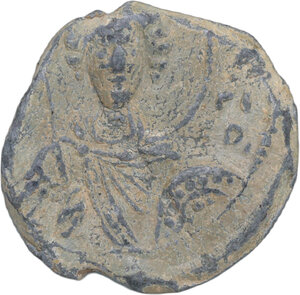
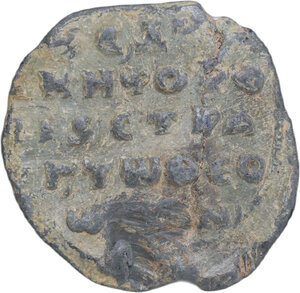
PB Seal, Byzantine, Nikephoros Theodorokanos, patrikios and strategos (1025-1055). D/ O A ΓЄωPΓIOC. Bust of St. George facing, holding spear and shield. R/ Legend in six lines. Cf. SBS 13, p. 84. PB. 8.16 g. 24.5 mm. VF.
Watch:
Starting price: € 30
Currently: € 30
Number of bids: :
1
Minimum bid : €
35
B.P.: 20.00%
Closing on: 2026-09-06T14:00:00 Roma time
Lot # 602
-
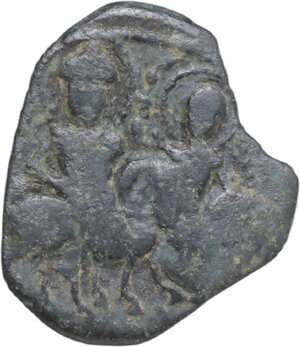
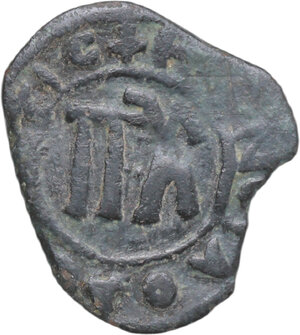
Manuel II Palaeologus (1391-1425). AE Tornese. Constantinople mint. D/ Facing bust of Christ Pantokrator; barred IC XC flanking, pellets in margin. R/ Crowned facing bust of Manuel. LPC p. 162, 6; Sear 2554; D.O. 1598. AE. 1.81 g. 20 mm. R. Green patina. VF/Good VF.
Watch:
Starting price: € 30
Currently: € 35
Number of bids: :
2
Minimum bid : €
40
B.P.: 20.00%
Closing on: 2026-09-06T14:00:00 Roma time
Lot # 601
-
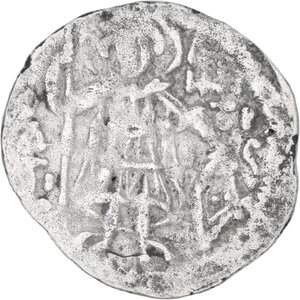
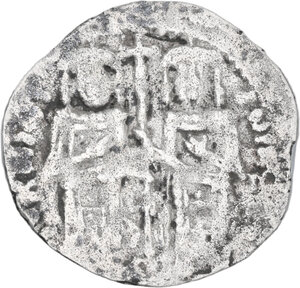
John V Palaeologus (1341-1391) with John VI. AR Basilikon. Constantinople mint. D/ St. Demetrios standing facing, holding spear and shield. R/ John V and John VI standing facing, each placing hand on breast and holding long cross between them. LPC -; PCPC -; cf. CNG 96, lot 1038 & CNG 99, lot 887; D.O. -; Sear -. AR. 1.57 g. 19 mm. RRRR. Extremely rare and unpublished in the standard references. VF.
Watch:
Starting price: € 100
Currently: € 100
Number of bids: :
1
Minimum bid : €
110
B.P.: 20.00%
Closing on: 2026-09-06T14:00:00 Roma time
Lot # 600
-
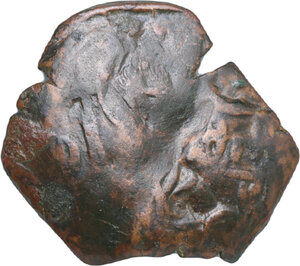
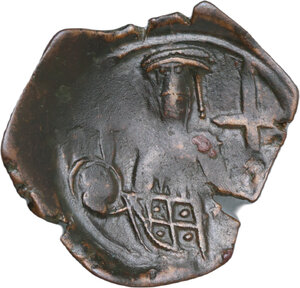
Andronicus III Palaeologus (1328-1341). AE Trachy. Thessalonica mint. D/ Facing bust of Archangel Michael. R/ Half-lenght figure of Andronicus holding globus cruciger in each hand. LPC -; PCPC (244); Sear 2492. AE. 2.3 g. 22 mm. RRR. Extremely rare; brown patina. Good F/About VF.
Watch:
Starting price: € 50
Number of bids: :
-
Minimum bid : €
50
B.P.: 20.00%
Closing on: 2026-09-06T14:00:00 Roma time
Lot # 599
-
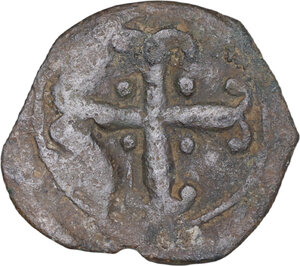
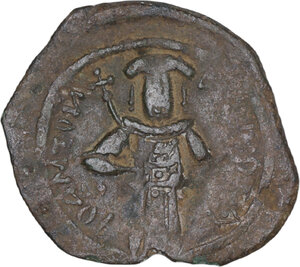
Andronicus III Palaeologus (1328-1341). AE Assarion. Constantinople mint. D/ Cross ancrée set upon short cross in saltire. R/ Andronicus standing facing, holding cruciform sceptre. LPC p. 126, 13; PCPC 205; Sear 2481; D.O. 908-912. AE. 1.8 g. 22 mm. VF.
Watch:
Starting price: € 50
Number of bids: :
-
Minimum bid : €
50
B.P.: 20.00%
Closing on: 2026-09-06T14:00:00 Roma time
Lot # 598
-
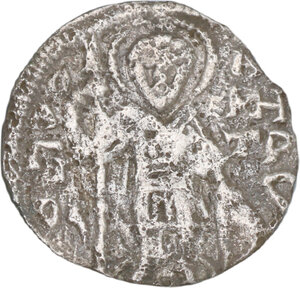
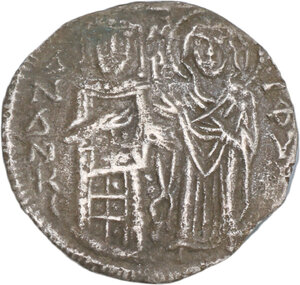
Andronicus III Palaeologus (1328-1341). AR Half Basilikon. Constantinople mint. D/ O AΓIOC ΔHMHTPIOC. St. Demetrius standing facing, holding spear and shield. R/ ANΔPONIKOC MHP ΘV. Andronicus, raising hands in adoration, and the Virgin Mary standing facing. LPC p. 120, 6; PCPC 196; Sear 2476; D.O. 867-868. AR. 0.9 g. 16 mm. RR. Rare silver issue. VF. Ex Dara antiques museum E-II, 2021, lot 1423.
Watch:
Starting price: € 70
Currently: € 70
Number of bids: :
2
Minimum bid : €
75
B.P.: 20.00%
Closing on: 2026-09-06T14:00:00 Roma time
Lot # 597
-
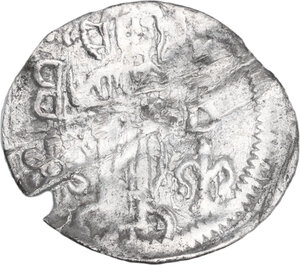
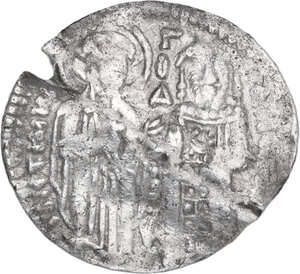
Andronicus III Palaeologus (1328-1341). AR Basilikon. Constantinople mint. D/ Christ Pantokrator standing facing; retrograde B and flower to left, B and lis to right. R/ St. Demetrius, holding cross, and Andronicus, placing hand on chest, standing facing. LPC p. 120, 5; Sear 2473; D.O. 871-873. AR. 1.08 g. 20 mm. RR. Rare issue Flan bent and edge fault, otherwise. VF. Ex Concordia Numismatic 10, 2023, lot 556.
Watch:
Starting price: € 70
Currently: € 70
Number of bids: :
1
Minimum bid : €
75
B.P.: 20.00%
Closing on: 2026-09-06T14:00:00 Roma time
Lot # 596
-
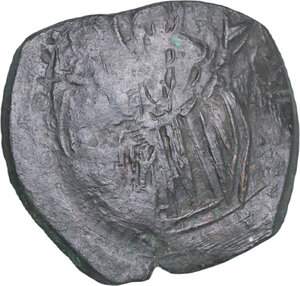
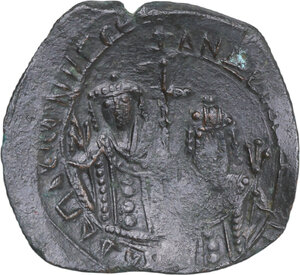
Andronicus II Palaeologus, with Andronicus III (1328-1332). AE Trachy, Constantinople mint. D/ The Virgin Mary standing facing, orans. R/ Crowned facing figures of Andronicus II and Andronicus III, each wearing loros and holding trefoil sceptre and long cross between them. LPC 110, 5; PCPC 189; Sear 2461; D.O. 623. AE. 2.42 g. 23 mm. RR. Rare Trachy. VF. Ex Leu Numismatik web 18, 2021, lot 3930.
Watch:
Starting price: € 40
Number of bids: :
-
Minimum bid : €
40
B.P.: 20.00%
Closing on: 2026-09-06T14:00:00 Roma time
Lot # 595
-
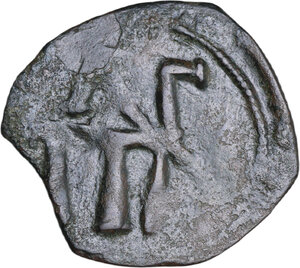
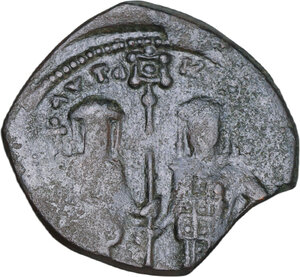
Andronicus II and Michael IX (1295-1320). AE Assarion, Constantinople mint. D/ Palaeologan monogram. R/ Half-length facing figures of Andronicus and Michael, each holding cruciform sceptre and between them a labarum. LPC p. 100, 53; 184; Sear 2452; D.O. 712. AE. 2.42 g. 22 mm. R. Some roughness. About VF. Ex Savoca Numismatik 134th blue, 2022, lot 1387.
Watch:
Starting price: € 30
Number of bids: :
-
Minimum bid : €
30
B.P.: 20.00%
Closing on: 2026-09-06T14:00:00 Roma time
Lot # 594
-
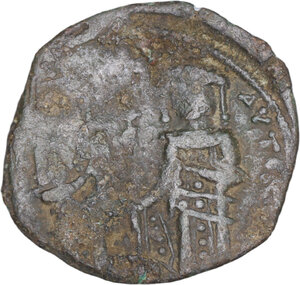
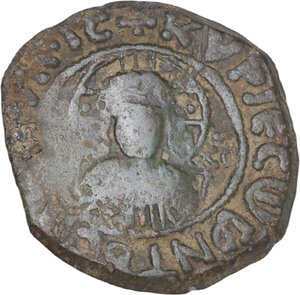
Andronicus II and Michael IX (1295-1320). AE Assarion, Constantinople mint. D/ AVTOKPATOPEC POMAION, Andronicus and Michael standing facing, holding labarum between them. R/ + KVPIE CωCON TOVC BACIΛEIC, Draped bust of Christ facing. LPC p. 90, 37; PCPC 169; Sear 2436; D.O. 681-682. AE. 2.54 g. 21.5 mm. Brown patina. About VF.
Watch:
Starting price: € 30
Currently: € 30
Number of bids: :
1
Minimum bid : €
35
B.P.: 20.00%
Closing on: 2026-09-06T14:00:00 Roma time
Lot # 593
-
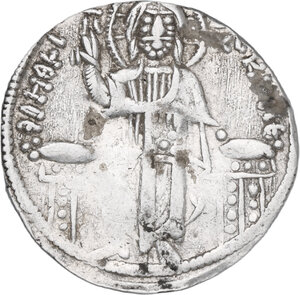
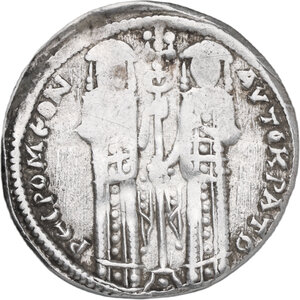
Andronicus II and Michael IX (1295-1320). AR Basilikon, Constantinople mint. D/ KYPIЄ BOHΘЄI / IC - XC. Christ enthroned facing, raising hand in benediction and holding Gospels; pellet to left and right. R/ AVTOKPATO-PЄC PωMAION. Andronicus and Michael standing facing, holding labarum between them. LPC p. 88, 35; PCPC 167.2; Sear 2402; D.O. 521. AR. 2.06 g. 21 mm. Scarce. VF/Good VF. Ex Biga Numismatics 1, 2020, lot 649.
Watch:
Starting price: € 100
Number of bids: :
-
Minimum bid : €
100
B.P.: 20.00%
Closing on: 2026-09-06T14:00:00 Roma time
Lot # 592
-
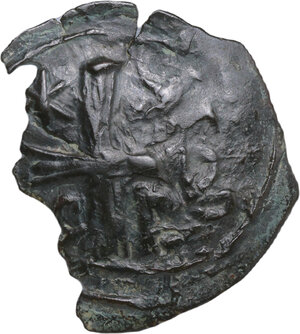
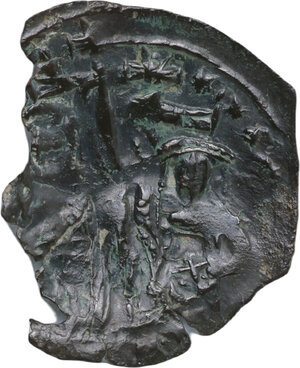
Andronicus II and Michael IX (1295-1320). AE Trachy, Thessalonica mint. D/ Large cross potent; stars in upper quarters, B B in lower quarters. R/ Facing busts of Andronicus and Michael, holding between them a large patriarchal cross. LPC -; Sear -; D.O. 774-777. AE. 0.9 g. 22 mm. RRRR. Very rare; irregular flan. VF. Ex Numismatik Naumann 157, 2025, lot 1324.
Watch:
Starting price: € 60
Number of bids: :
-
Minimum bid : €
60
B.P.: 20.00%
Closing on: 2026-09-06T14:00:00 Roma time
Lot # 591
-
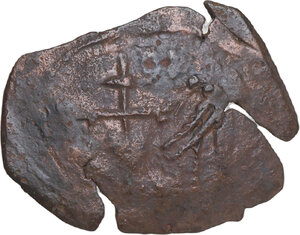
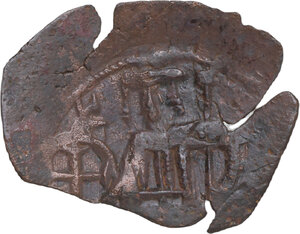
Andronicus II Palaeologus (1282-1328). AE Trachy, Thessalonica mint. D/ Large patriarchal cross with wing to right; retrograde B to left. R/ Andronicus standing facing, holding cross-in-circle and labarum; stars to left and right. LPC p. 218, 22; PCPC 243; Sear 2383; D.O. 804-806. AE. 1.15 g. 21.5 mm. Brown patina; irregular flan. VF. Ex Savoca Numismatik 112th blue, 2021, lot 2338.
Watch:
Starting price: € 20
Number of bids: :
-
Minimum bid : €
20
B.P.: 20.00%
Closing on: 2026-09-06T14:00:00 Roma time
Lot # 590
-
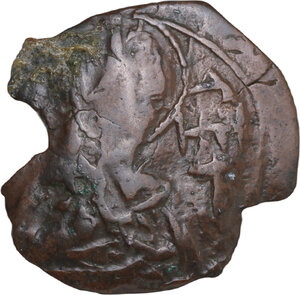
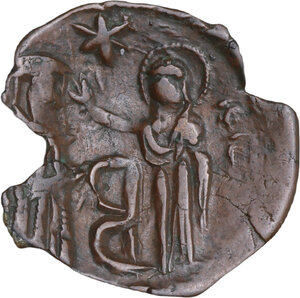
Andronicus II Palaeologus (1282-1328). AE Trachy, Thessalonica mint. D/ Facing bust of St. Demetrius, holding small cross to chest. R/ Andronicus standing facing, holding cruciform sceptre and being crowned and blessed by the Virgin Mary to right; star above, retrograde B between. LPC p. 204, 2; PCPC 250; Sear 2360; D.O. 825-832. AE. 1.15 g. 20 mm. Brown patina; irregular flan. VF. Ex Münzzentrum Rheinland 180, 2017, lot 1124.
Watch:
Starting price: € 40
Number of bids: :
-
Minimum bid : €
40
B.P.: 20.00%
Closing on: 2026-09-06T14:00:00 Roma time
Lot # 589
-
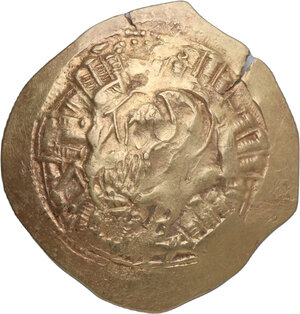
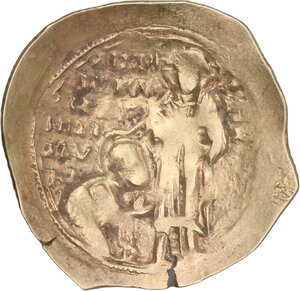
Andronicus II Palaeologus (1282-1328). AV Hyperpyron, Constantinople mint. D/ Bust of the Virgin orans within city walls with six groups of towers. R/ Andronicus, nimbate, kneeling right, being blessed by Christ standing facing. LPC p. 34, 1; PCPC 91B; Sear 2326; D.O. 220-228. AV. 4.06 g. 28 mm. Toned; flan cracks. VF.
Watch:
Starting price: € 350
Currently: € 350
Number of bids: :
1
Minimum bid : €
370
B.P.: 20.00%
Closing on: 2026-09-06T14:00:00 Roma time
Lot # 588
-
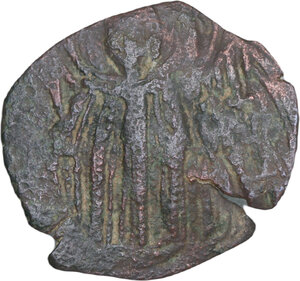
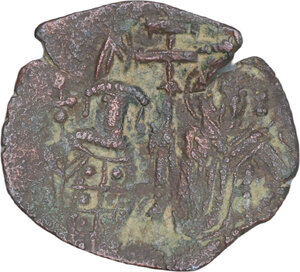
Michael VIII Palaeologus and Andronicus II (1272-1282). AE Trachy, Constantinople mint. D/ Ornate labarum springing from crescent; pellets around. R/ The two emperors standing facing, holding patriarchal cross between them. LPC p. 80, 24 (Andronicus II and Michael IX); Sear 2325 (Andronicus II and Michael IX); D.O. 209-211. AE. 1.18 g. 20.5 mm. R. Green patina. VF. Ex Numismatik Naumann 121, 2022, lot 897.
Watch:
Starting price: € 40
Number of bids: :
-
Minimum bid : €
40
B.P.: 20.00%
Closing on: 2026-09-06T14:00:00 Roma time
Lot # 587
-
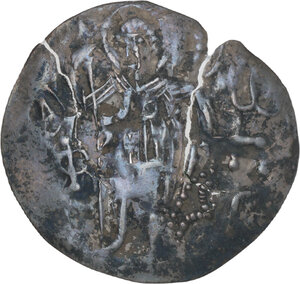
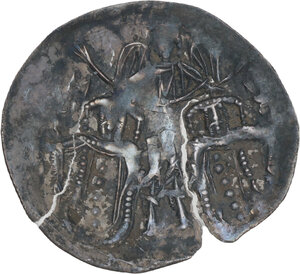
Michael VIII Palaeologus and Andronicus II (1272-1282). AR Trachy, Constantinople mint. D/ St. George, nimbate, wearing military attire, standing facing, holding spear and resting on shield. R/ Half-length figures of Michael VIII and Andronicus II facing, holding trilobate sceptre, scroll and akakia; bust of winged archangel above between, placing his hands on their heads. LPC -; PCPC 85; Sear 2321 (Thessalonica); D.O. 36. AR. 1.2 g. 24 mm. RRR. Extremely rare; large flan-cracks, otherwise. VF. Ex Roma Numismatics E-85, 2021, lot 2637.
Watch:
Starting price: € 300
Number of bids: :
-
Minimum bid : €
300
B.P.: 20.00%
Closing on: 2026-09-06T14:00:00 Roma time
Lot # 586
-
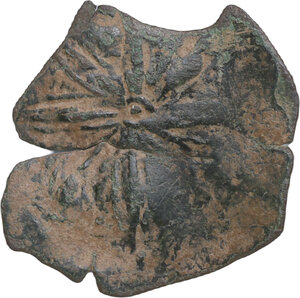
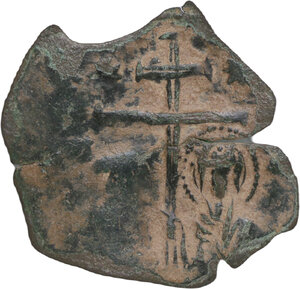
Michael VIII Palaeologus (1261-1282). AE Trachy, Thessalonica mint. D/ Star or stellate pattern with eight petals. R/ Half-length facing busts of Michael, holding labarum, and the Virgin Mary; patriarchal cross between; star to upper left and right. Bendall/Donald UT2; Sear 2311; D.O. 152-154. AE. 1.3 g. 25.5 mm. RRR. Very rare. Earthy brown patina. Good F/About VF. Ex Savoca Numismatik 120th blue, 2021, lot 1702.
Watch:
Starting price: € 50
Number of bids: :
-
Minimum bid : €
50
B.P.: 20.00%
Closing on: 2026-09-06T14:00:00 Roma time
Lot # 585
-
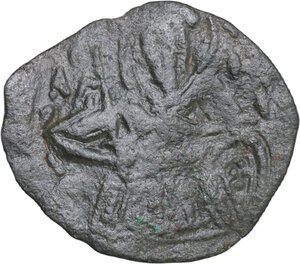
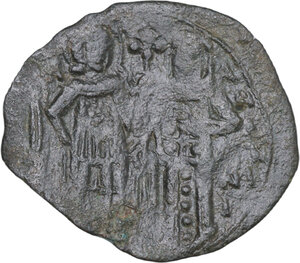
Michael VIII Palaeologus (1261-1282). AE Trachy, Thessalonica mint. D/ Half-length facing bust of St. Demetrius, holding sword and shield. R/ St. Michael the Archangel on left and Michael on right standing facing, holding between them a long cross; crowning manus Dei above. Bendall/Donald T3 var. (same); Sear 2296 var. (figures on reverse reverted); D.O. 144 var. (same). AE. 0.98 g. 22 mm. RRR. Very rare variant. VF. Ex Aphrodite Art Coins 14, 2023, lot 1288.
Watch:
Starting price: € 50
Number of bids: :
-
Minimum bid : €
50
B.P.: 20.00%
Closing on: 2026-09-06T14:00:00 Roma time
Lot # 584
-
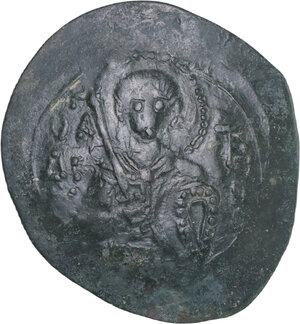
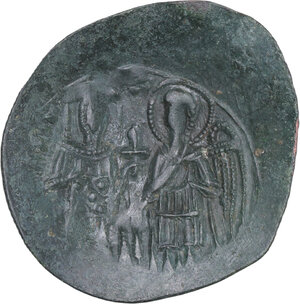
Michael VIII Palaeologus (1261-1282). AE Trachy, Thessalonica mint. D/ Half-length facing bust of St. Demetrius, holding sword and shield. R/ Michael and St. Michael the Archangel standing facing, holding between them a long cross; manus Dei above. Bendall/Donald T3; Sear 2296; D.O. 144-146. AE. 2.7 g. 30 mm. Dark green patina. VF/Good VF.
Watch:
Starting price: € 40
Currently: € 40
Number of bids: :
2
Minimum bid : €
45
B.P.: 20.00%
Closing on: 2026-09-06T14:00:00 Roma time
Lot # 583
-
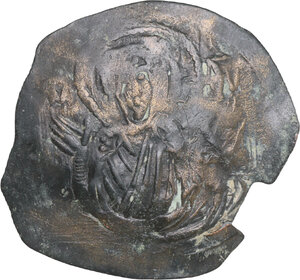
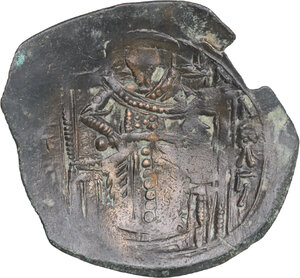
Michael VIII Palaeologus (1261-1282). AE Trachy, Constantinople mint. D/ Half-length facing bust of the Virgin Mary, orans. R/ Michael seated facing on throne, holding sword across knees. Bendall/Donald C16; Sear 2275; D.O. 91-95. AE. 2.54 g. 29 mm. Brown patina. VF. Ex Savoca Numismatik 26th blue, 2019, lot 2164.
Watch:
Starting price: € 40
Number of bids: :
-
Minimum bid : €
40
B.P.: 20.00%
Closing on: 2026-09-06T14:00:00 Roma time
Lot # 582
-
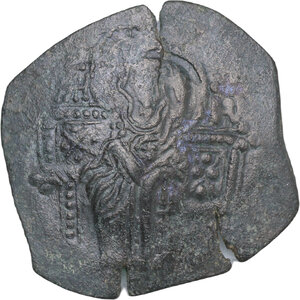
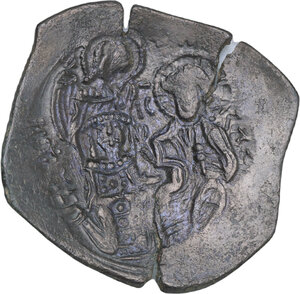
Michael VIII Palaeologus (1261-1282). AE Trachy, Constantinople mint. D/ The Virgin Mary seated facing on throne. R/ Michael kneeling right before Christ; in background, Archangel Michael. Bendall/Donald C2; Sear 2260; D.O. 5. AE. 2.85 g. 29 mm. Flan-cracks. VF/Good VF. Ex Numismatik Naumann 115, 2022, lot 1141.
Watch:
Starting price: € 40
Currently: € 40
Number of bids: :
2
Minimum bid : €
45
B.P.: 20.00%
Closing on: 2026-09-06T14:00:00 Roma time
Lot # 581
-
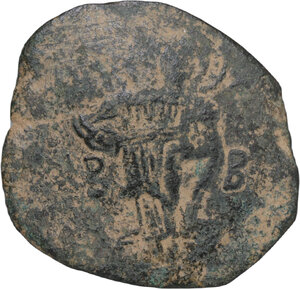
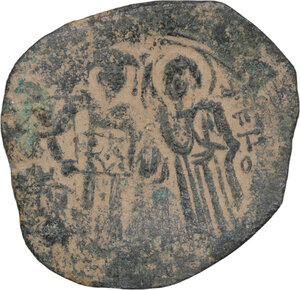
Theodore II, Ducas-Lascaris (1254-1258). BI Trachy, Empire of Nicaea, Magnesia mint. D/ Christ Pantokrator standing facing on dais; B to left and right. R/ Theodore standing facing, holding cruciform sceptre and globus cruciger; crowning Virgin Mary to right. Sear 2141; D.O. 9. BI. 4.3 g. 30 mm. R. Earthy brown patina. About VF. Ex Zeus Numismatics 4, 2020, lot 1165.
Watch:
Starting price: € 20
Currently: € 32
Number of bids: :
4
Minimum bid : €
37
B.P.: 20.00%
Closing on: 2026-09-06T14:00:00 Roma time
Lot # 580
-
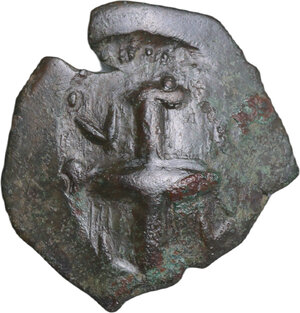
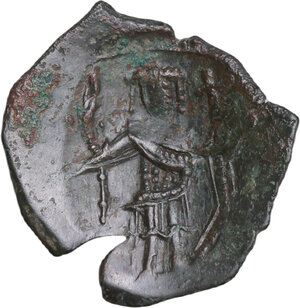
Latin Rulers of Constantinople. BI Trachy, small module. D/ Large cross set upon base; X-C/N-K in quarters. R/ Emperor standing facing, holding spear and globus cruciger. Sear 2054; D.O. 23. BI. 1.13 g. 19 mm. R. Dark green patina; flan-crack. VF.
Watch:
Starting price: € 40
Number of bids: :
-
Minimum bid : €
40
B.P.: 20.00%
Closing on: 2026-09-06T14:00:00 Roma time
Lot # 579
-
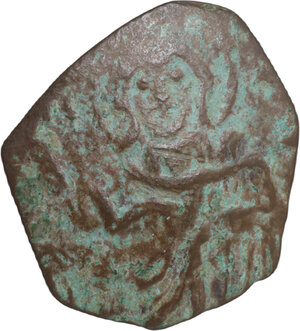
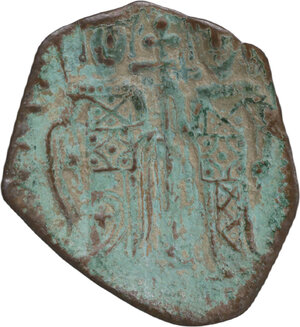
Latin Rulers of Constantinople. BI Trachy, small module. D/ Christ Pantokrator seated facing on throne. R/ St. Helena and St. Constantine standing facing, holding between them a patriarchal cross. Sear 2049; D.O. 35. BI. 0.99 g. 20 mm. R. Green patina. VF. Ex Savoca Numismatik 89th blue, 2020, lot 1762.
Watch:
Starting price: € 30
Number of bids: :
-
Minimum bid : €
30
B.P.: 20.00%
Closing on: 2026-09-06T14:00:00 Roma time
Lot # 578
-
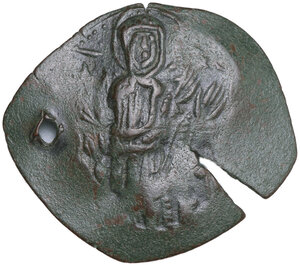
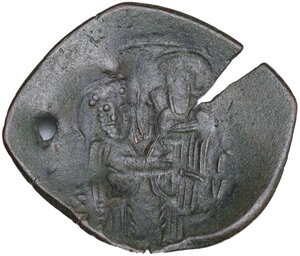
Latin Rulers of Constantinople. BI Trachy, large module. D/ The Theotokos Hagiosoritissa standing slightly right, orans; manus Dei to upper right. R/ Sts. Peter and Paul embracing one another. Sear 2040; D.O. 20. BI. 2.48 g. 30 mm. R. Flan crack and hole, otherwise. VF. Ex Savoca Numismatik 217, 2024, lot 1157.
Watch:
Starting price: € 40
Number of bids: :
-
Minimum bid : €
40
B.P.: 20.00%
Closing on: 2026-09-06T14:00:00 Roma time
Lot # 577
-
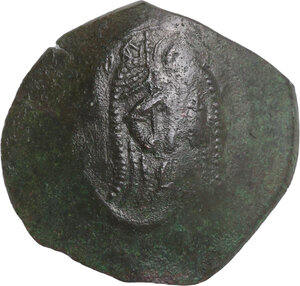
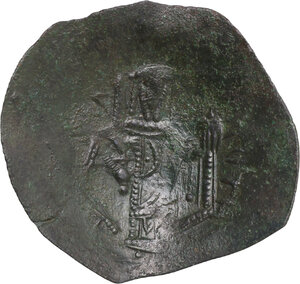
Latin Rulers of Constantinople. BI Trachy, large module. D/ Archangel Michael standing facing, holding globus. R/ Emperor standing facing, holding cross-tipped sceptre and globus cruciger. Sear 2030; D.O. 10. BI. 4.02 g. 33 mm. R. Dark green patina. VF. Ex Numismatik Naumann 93, 2020, lot 650.
Watch:
Starting price: € 30
Number of bids: :
-
Minimum bid : €
30
B.P.: 20.00%
Closing on: 2026-09-06T14:00:00 Roma time
Lot # 576
-
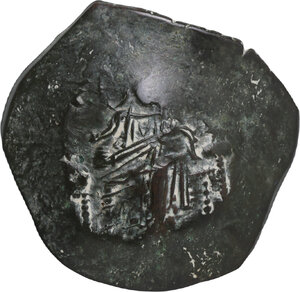
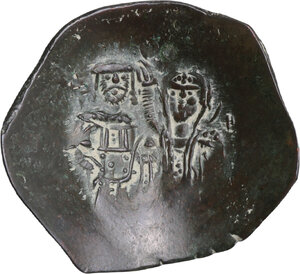
Latin Rulers of Constantinople. BI Trachy, large module. D/ Christ Pantokrator seated facing on throne, holding gospel and raising hand in benediction; stars flanking. R/ Emperor standing facing, holding labarum and being crowned by Virgin standing left. Sear 2026; D.O. 6. BI. 3.5 g. 27.5 mm. R. VF/Good VF.
Watch:
Starting price: € 40
Number of bids: :
-
Minimum bid : €
40
B.P.: 20.00%
Closing on: 2026-09-06T14:00:00 Roma time
Lot # 575
-
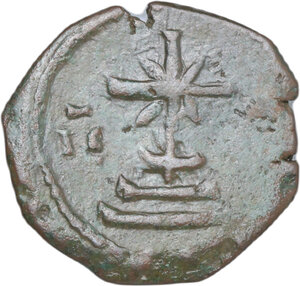
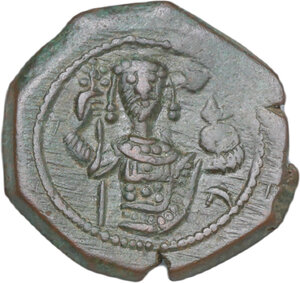
Manuel I Comnenus (1143-1180). AE Tetarteron, Thessalonica mint. D/ IC - XC. Cross with X at centre, set on three steps. R/ Crowned half-length figure of Manuel standing facing, holding labarum and globus cruciger. Sear 1976; D.O. 19. AE. 2.5 g. 18.5 mm. Accompanied with old collector’s tag. Good VF.
Watch:
Starting price: € 40
Number of bids: :
-
Minimum bid : €
40
B.P.: 20.00%
Closing on: 2026-09-06T14:00:00 Roma time
Lot # 574
-
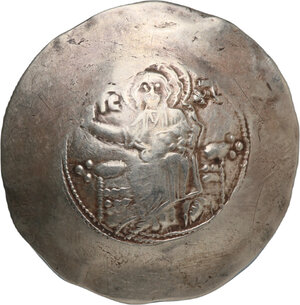
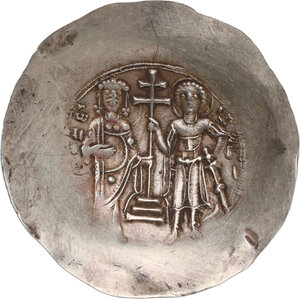
John II Comnenus (1118-1143). EL Aspron Trachy Nomisma. Third coinage. Constantinople mint. Struck 1122-c. 1143. D/ IC - XC. Christ Pantokrator enthroned facing. R/ John and St. George, holding sword, standing facing, holding patriarchal cross on three steps between them. D.O. 8c; Sear 1942. EL. 4.41 g. 33 mm. Graffiti. VF/Good VF. Ex Künker 89, 2004, lot 2947.
Watch:
Starting price: € 350
Number of bids: :
-
Minimum bid : €
350
B.P.: 20.00%
Closing on: 2026-09-06T14:00:00 Roma time
Lot # 573
-
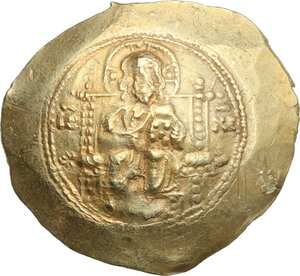
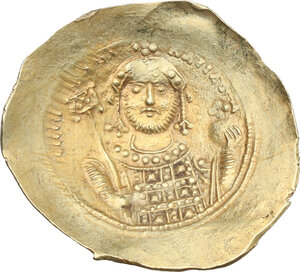
Michael VII Ducas (1071-1078). AV Histamenon Nomisma, Constantinople mint. D/ Christ Pantokrator enthroned facing. R/ Crowned facing bust of Michael, wearing loros, holding labarum and globus cruciger. D.O. 1; Sear 1869. AV. 4.4 g. 28.5 mm. Graffiti and hairlines. VF.
Watch:
Starting price: € 350
Currently: € 370
Number of bids: :
2
Minimum bid : €
390
B.P.: 20.00%
Closing on: 2026-09-06T14:00:00 Roma time
Lot # 572
-
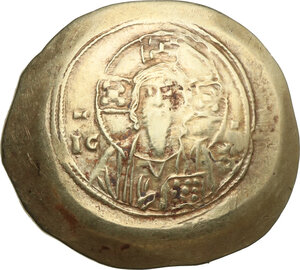
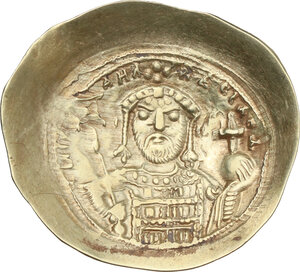
Michael VII Ducas (1071-1078). AV Histamenon Nomisma, Constantinople mint. D/ IC-XC. Nimbate bust of Christ facing, wearing pallium and colobium, raising right hand in benediction and holding in left book of Gospels. R/ MIXAHΛ RACIΛ. Bust facing, bearded, wearing crown and loros and holding labarum and globus cruciger. D.O. 2; Sear 1868. AV. 4.33 g. 28.5 mm. Good VF.
Watch:
Starting price: € 350
Currently: € 350
Number of bids: :
1
Minimum bid : €
370
B.P.: 20.00%
Closing on: 2026-09-06T14:00:00 Roma time
Lot # 571
-
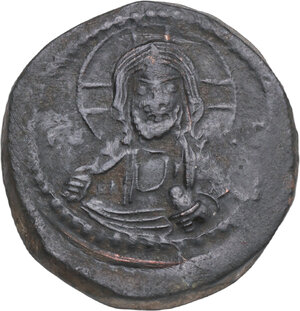
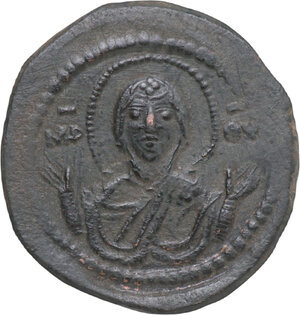
Anonymous Folles. Attributed to Romanus IV. AE Follis. Constantinople mint. D/ Nimbate half-length bust of Christ facing, raising hand in benediction and holding scroll. R/ Nimbate half-length bust of the Theotokos facing, orans. D.O. pp. 692-4, Class G; Sear 1867. AE. 12.11 g. 28 mm. Cleaning marks. VF/Good VF.
Watch:
Starting price: € 40
Number of bids: :
-
Minimum bid : €
40
B.P.: 20.00%
Closing on: 2026-09-06T14:00:00 Roma time
Lot # 570
-
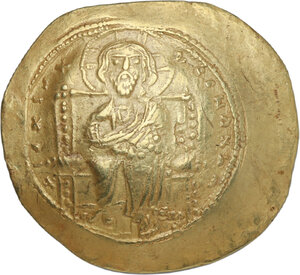
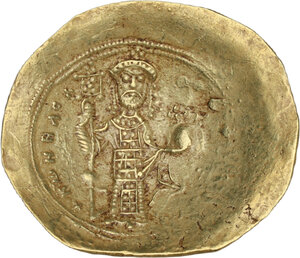
Constantine X Ducas (1059-1067). AV Histamenon Nomisma. Constantinople mint. D/ + IҺS XIS RЄX RЄGNANTIҺM. Christ Pantokrator enthroned facing. R/ + KωN BACI O ΔOVKAC. Constantine standing facing, holding labarum and globus cruciger. D.O. 1b; Sear 1847. AV. 4.35 g. 26.5 mm. Toned; good example. Good VF.
Watch:
Starting price: € 500
Currently: € 550
Number of bids: :
2
Minimum bid : €
600
B.P.: 20.00%
Closing on: 2026-09-06T14:00:00 Roma time
Lot # 569
-
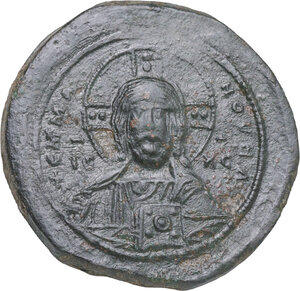
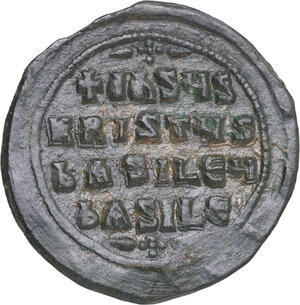
Anonymous. Time of Basil II to Constantine VIII. AE Follis, Constantinople mint. D/ Bust of Christ Pantokrator facing, nimbate with cross, holding book. R/ Legend in four lines. Sear 1813; D.O. Class A2. AE. 18.78 g. 35 mm. Cleaning marks. About EF.
Watch:
Starting price: € 50
Number of bids: :
-
Minimum bid : €
50
B.P.: 20.00%
Closing on: 2026-09-06T14:00:00 Roma time
Lot # 568
-
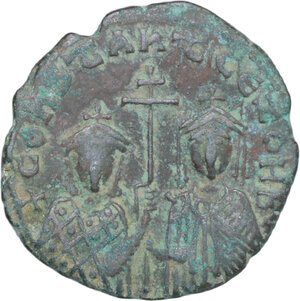
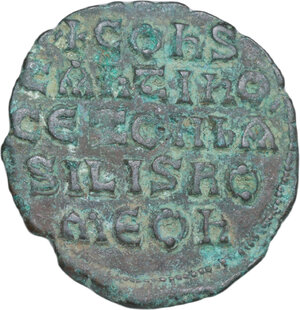
Constantine VII (913-959) with Zoe. AE Follis, Constantinople mint. D/ Crowned busts of Constantine VII, wearing loros, and Zoe, wearing chlamys, facing, holding long patriarchal cross between them. R/ + COnS/tAntInO/CE/ZOH bA/SILIS RO/mEOn. D.O. 22; Sear 1758. AE. 5 g. 26 mm. Green patina. VF.
Watch:
Starting price: € 40
Number of bids: :
-
Minimum bid : €
40
B.P.: 20.00%
Closing on: 2026-09-06T14:00:00 Roma time
Lot # 567
-
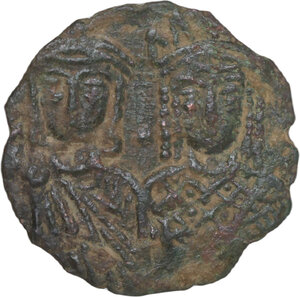
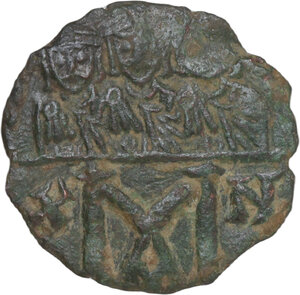
Constantine VI and Irene (780-797). AE Follis, Constantinople mint. D/ Crowned facing busts of Constantine VI, holding globus cruciger, and Irene, holding globus cruciger and cruciform sceptre; cross above. R/ Crowned facing busts of Constantine V, Leo III and Leo IV set on horizontal bar; below, large M flanked by X-N, A below. D.O. 6; Sear 1596. AE. 2 g. 19 mm. R. Green-brown patina. VF/Good VF.
Watch:
Starting price: € 150
Number of bids: :
-
Minimum bid : €
150
B.P.: 20.00%
Closing on: 2026-09-06T14:00:00 Roma time
Lot # 566
-
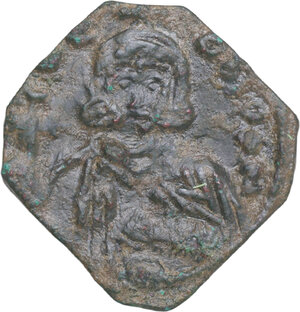
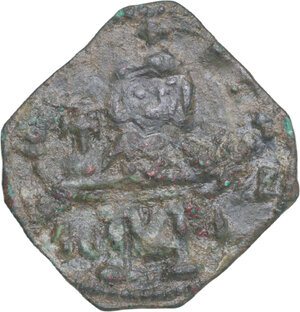
Leo III the 'Isaurian', with Constantine V (720-741). AE Follis, Syracuse mint, c. 730-741. D/ Bust of Leo III facing with short beard, wearing crown and chlamys, holding globus cruciger and akakia. R/ Bust of Constantine V facing wearing crown and chlamys, holding globus cruciger and akakaia; all above ornate horizontal bar, beneath which large M between SC and L. D.O. 54; Ratto 1749 (Constantine V); Sear 1530. AE. 3.11 g. 25 mm. R. Good VF. Ex Artemide Aste E-19, 2021, lot 721.
Watch:
Starting price: € 40
Number of bids: :
-
Minimum bid : €
40
B.P.: 20.00%
Closing on: 2026-09-06T14:00:00 Roma time
Lot # 565
-
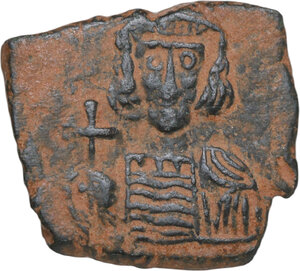
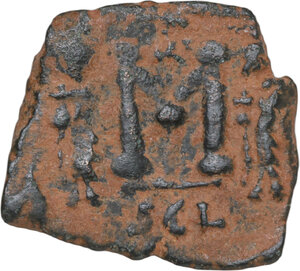
Constantine IV Pogonatus, with Heraclius and Tiberius (668-685). AE Follis. Syracuse mint. Struck 669-672 AD. D/ Helmeted and cuirassed facing bust, holding globus cruciger. R/ Large M; monogram above; to left and right, Heraclius and Tiberius standing; in exergue, SCL. D.O. 60; Sear 1207; Sp. 172. AE. 3.51 g. 21 mm. Brown patina. VF/Good VF.
Watch:
Starting price: € 40
Number of bids: :
-
Minimum bid : €
40
B.P.: 20.00%
Closing on: 2026-09-06T14:00:00 Roma time
Lot # 564
-
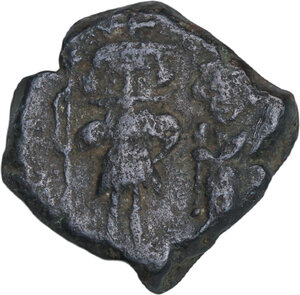
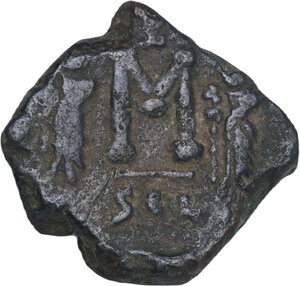
Constans II, with Constantine IV, Heraclius, and Tiberius (641-668). AE Follis, Syracuse mint, c. 659-668. D/ Constans, bearded and holding long cross, and his son Constantine, beardless and holding globus cruciger, standing facing. R/ Large M, flanked by Heraclius and Tiberius, both crowned and holding globus cruciger, standing facing; above, monogram; below, SCL. D.O. 181; MIB 210; Sear 1110. AE. 6.51 g. 21 mm. Green patina. About VF. Ex London Ancient Coins 69, 2023, lot 403.
Watch:
Starting price: € 25
Number of bids: :
-
Minimum bid : €
25
B.P.: 20.00%
Closing on: 2026-09-06T14:00:00 Roma time
Lot # 563
-
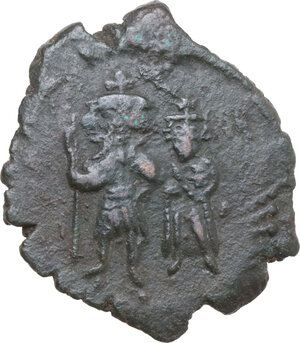
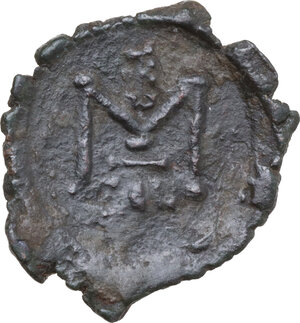
Constans II (641-668) with Constantine IV. AE Follis, Syracuse mint, 654-659. D/ Constans, crowned, in military attire, and Constantine, crowned, wearing chlamys and holding globus cruciger, standing facing. R/ Large M (mark of value); above, monogram; below, SCL. MIB 209; D.O. 180; Sear 1109. AE. 5.94 g. 19.5 mm. Good example with dark patina. Traces of overstrike. VF.
Watch:
Starting price: € 30
Number of bids: :
-
Minimum bid : €
30
B.P.: 20.00%
Closing on: 2026-09-06T14:00:00 Roma time
Lot # 562
-
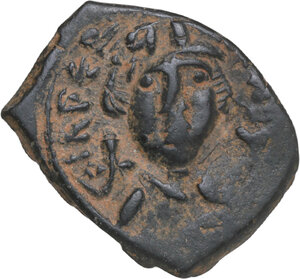
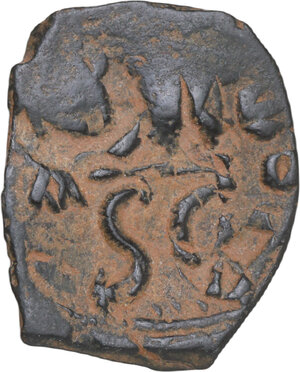
Constans II (641-668). AE Follis, Syracuse mint, 642-643. D/ Crowned and draped bust facing, holding globus cruciger. R/ Large m; below, SC; flanked by A/N/A-N/E/O/S. D.O. (Herclonas) 9; MIB 204c; Sear 1103. AE. 4.54 g. 25 mm. Red desert patina. Traces of undertype. VF.
Watch:
Starting price: € 30
Currently: € 30
Number of bids: :
1
Minimum bid : €
35
B.P.: 20.00%
Closing on: 2026-09-06T14:00:00 Roma time
Lot # 561
-
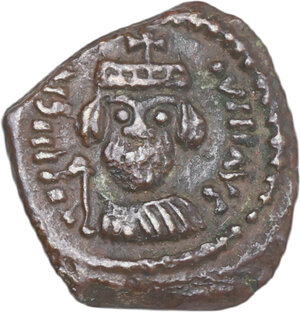
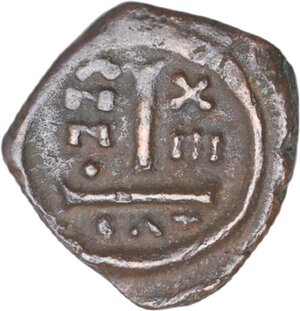
Heraclius (610-641). AE Decanummium. Catania mint. RY 13. D/ Crowned, draped and cuirassed bust facing, holding globus cruciger. R/ Large I; A/N/N/O to left, X/III to right; in exergue, CAT. D.O. 254; MIB 240; Sear 885. AE. 2.49 g. 16.5 mm. Brown patina. Accompanied with old collector’s tag. Good VF.
Watch:
Starting price: € 40
Number of bids: :
-
Minimum bid : €
40
B.P.: 20.00%
Closing on: 2026-09-06T14:00:00 Roma time
Lot # 560
-
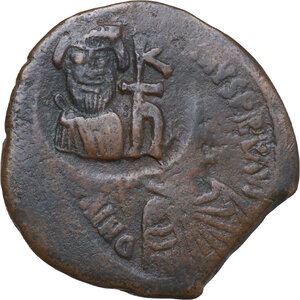
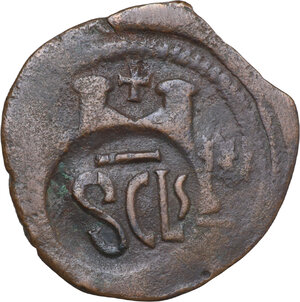
Heraclius (610-641). AE Follis, overstruck on a Follis of Justinian I. Syracuse mint, 615/6-627/8. D/ Bust of Heraclius facing, monogram to right within an oval punch stamped over obverse type of Justinian I. R/ SCL within a circular punch stamped over the large M of the undertype. D.O. 241; Sear 882. AE. 12.78 g. 34 mm. Very good example; brown patina. With old collection’s tag. Good VF.
Watch:
Starting price: € 50
Currently: € 50
Number of bids: :
1
Minimum bid : €
55
B.P.: 20.00%
Closing on: 2026-09-06T14:00:00 Roma time
Lot # 559
-
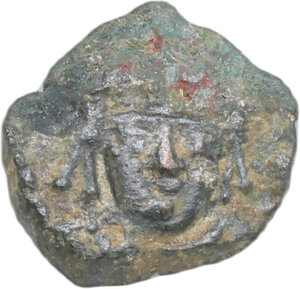
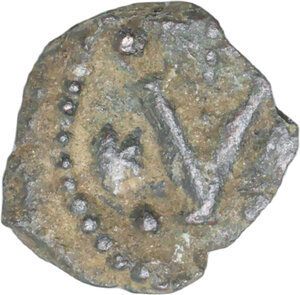
Heraclius (610-641). AE Pentanummium, Carthage mint. D/ Helmeted and cuirassed facing bust. R/ Large V between two stars; [cross above]. MIB 239; D.O. 239; Sear 880. AE. 1.17 g. 12 mm. Green patina. Accompanied with old collector’s tag. About VF.
Watch:
Starting price: € 30
Currently: € 30
Number of bids: :
1
Minimum bid : €
35
B.P.: 20.00%
Closing on: 2026-09-06T14:00:00 Roma time
Lot # 558
-
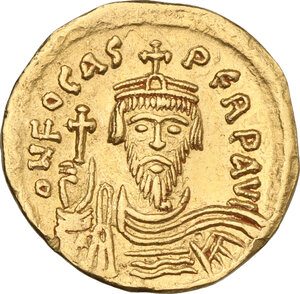
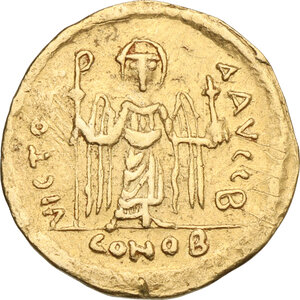
Phocas (602-610). AV Solidus, Constantinople mint, 604-607 AD. D/ ∂N FOCAS PЄRP AVC. Crowned and cuirassed bust facing, holding globus cruciger. R/ VICTORIA AVGG B. Angel standing facing, holding globus cruciger and long staff terminating in staurogram; in exergue, CONOB. D.O. 5b; MIB 7; Sear 618. AV. 4.27 g. 20 mm. Light scratches and graffiti, otherwise. Good VF/about EF.
Watch:
Starting price: € 450
Currently: € 550
Number of bids: :
5
Minimum bid : €
600
B.P.: 20.00%
Closing on: 2026-09-06T14:00:00 Roma time
Lot # 557
-
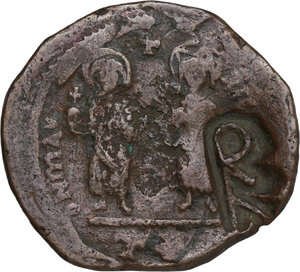
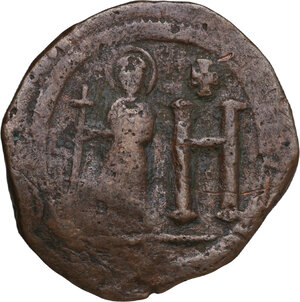
Maurice Tiberius (582-602). AE 8 Pentanummi, Cherson mint, c. 584-602. D/ d N mAVRIC PP AVG AVG. Maurice on left and the Empress Constantina on right, standing facing, both nimbate; Maurice holding globus cruciger, the Empress holding long cruciform sceptre; cross above; c/m: to right, Heraclius monogram. R/ Large H, cross above; to left, Theodosius standing facing, nimbate, holding long cross. D.O. 303.2 var. (obverse figures on dais); MIBE 157a²; Sear 607. AE. 11.9 g. 32.5 mm. R. Rare. Brown patina; interesting countermark. About VF.
Watch:
Starting price: € 100
Currently: € 100
Number of bids: :
1
Minimum bid : €
110
B.P.: 20.00%
Closing on: 2026-09-06T14:00:00 Roma time
Results from 1 to 50 of 3012